
Pyrenees to Galicia · France · Spain
Camino de Santiago — Francés
Thirty-three days on the Camino Francés, from the foot of the Pyrenees to the tomb of St James, sleeping in pilgrim hostels and stopping at churches all the way.
- 33 days
- 772 km
- 7,400 m of climbing
- 32 nights in albergues
Pilgrims have walked to Santiago de Compostela since the tomb of the apostle St James was found there in the 9th century. The Camino Francés, the 'French Way', is the classic route: about 780 km from Saint-Jean-Pied-de-Port, at the foot of the Pyrenees, across northern Spain to the cathedral in Galicia.
You carry a pilgrim credential and collect stamps from churches, hostels and cafés; you follow yellow arrows and scallop shells; and you sleep in albergues, pilgrim hostels where strangers become friends over shared dinners. It is a walk and a prayer at the same time, and the road teaches as much as the destination.
At a glance
Fly the route
Camino de Santiago from above
772 km on the real trail, over 3D terrain, past every chapter of the story.
Meditation planWith St James the Greater: prayers for every day of the trek
Walked under the patronage of St James the Greater. The apostle and fisherman, one of the three Jesus took up the mountain of the Transfiguration. Since the Middle Ages pilgrims have walked to his tomb in Santiago de Compostela. Feast day: 25 July.
Every day
Setting out
Each morning, before you lace your boots or at the trailhead.
Pray the pilgrim's offering
Lord God, you called Abraham out of his own country and went with him on every road. Go with me today on the way to the tomb of your apostle James.
I offer you the miles ahead, the blisters and the aching shoulders, the people I will meet at the fountains and in the bars. Be my shade on the Meseta and my shelter in the rain of Galicia, and bring me home a better pilgrim than I left. Amen.
V.St James,
R.pray for us.
Pray for the people who asked you to carry their intentions to Santiago.
At noon
Wherever you are on the trail, stop, take off your pack and pray together.
Pray the noon prayer of the way
V.Ultreia!
R.Et suseia!
"Onward! And upward!" The words come from a pilgrims' hymn in the 12th-century Codex Calixtinus.
Lord, halfway through the day, bless everyone walking this road: the fast and the slow, the believer and the searcher, the ones who are hurting and the ones who are running away. Bless the villages that give us water and bread. Make me a good companion until evening. Amen.
Pray the Angelus
V.The Angel of the Lord declared unto Mary,
R.And she conceived of the Holy Spirit.
Hail Mary, full of grace, the Lord is with thee; blessed art thou among women, and blessed is the fruit of thy womb, Jesus. Holy Mary, Mother of God, pray for us sinners, now and at the hour of our death. Amen.
V.Behold the handmaid of the Lord.
R.Be it done unto me according to thy word.
Hail Mary…
V.And the Word was made flesh,
R.And dwelt among us.
Hail Mary…
V.Pray for us, O holy Mother of God,
R.That we may be made worthy of the promises of Christ.
Let us pray.
Pour forth, we beseech thee, O Lord, thy grace into our hearts; that we, to whom the incarnation of Christ thy Son was made known by the message of an angel, may by his passion and cross be brought to the glory of his resurrection. Through the same Christ our Lord. Amen.
In camp
Each evening before you sleep: look back over the day, give thanks, ask for tomorrow.
Pray the Examen in the albergue
Sit on your bunk, take off your boots, and be still. God is here.
Give thanks for the hospitaleros who welcomed you, for the meal you shared, for every kindness on the road.
Ask for light to see the day as God sees it.
Walk back over the day's stage. Who walked beside you? Where did you feel Christ walking with you, as with the two disciples on the road to Emmaus?
Where did you walk too fast to notice someone? Ask forgiveness, and forgive.
Ask for what tomorrow needs: strong feet, an open heart, a bed at the end of it.
Stay with us, because it is towards evening. (Luke 24:29)
St James, pray for us. Glory be to the Father, and to the Son, and to the Holy Spirit; as it was in the beginning, is now, and ever shall be, world without end. Amen.

Days 1–3
Over the Pyrenees
Saint-Jean-Pied-de-Port → Pamplona
- 65.5 km
- ↑ 1,461 m
- ↓ 1,183 m
- 20 h walking, about 6 h 30 a day
Nights: Roncesvalles · Zubiri · Pamplona
The first day is the hardest: a long climb from Saint-Jean over the Pyrenees on the Route Napoléon, past grazing horses and griffon vultures, to Col de Lepoeder at about 1,450 m, then steeply down through beech woods to Roncesvalles.
In the collegiate church of Roncesvalles, the evening pilgrim Mass ends with a blessing for everyone setting out, in many languages. Two days through the green hills of Navarre bring you to Pamplona, inside its old city walls.
Don't miss
- The pilgrim blessing at Roncesvalles.
- Crossing the medieval bridge into Pamplona.
Meditation for days 1–3
“I have lifted up my eyes to the mountains, from whence help shall come to me.”
Psalm 120:1 (121:1)
Receive the blessing at Roncesvalles as if it were spoken to you alone. It is.
On the way: Église de l'Assomption de la Vierge, Orreagako Andre Mariaren eliza, Done Jakueren eliza.
The Route Napoléon over the mountains closes in winter and bad weather; then take the lower Valcarlos road.

Days 4–7
Navarre and the wine of Rioja
Pamplona → Logroño
- 93.0 km
- ↑ 841 m
- ↓ 912 m
- 25 h 30 walking, about 6 h 30 a day
Nights: Puente la Reina · Estella · Los Arcos · Logroño
Climb to the Alto del Perdón, where iron silhouettes of medieval pilgrims stride along the ridge among the wind turbines, then descend to Puente la Reina and its graceful Romanesque bridge, built for pilgrims nearly a thousand years ago.
Beyond Estella, the monastery winery at Irache keeps a fountain of free wine for pilgrims. The vineyards thicken as you cross into La Rioja and reach Logroño, famous for its narrow streets of tapas bars.
Don't miss
- The pilgrim sculptures on the Alto del Perdón.
- Puente la Reina's bridge in the evening.
Meditation for days 4–7
“For in his hand are all the ends of the earth: and the heights of the mountains are his.”
Psalm 94:4 (95:4)
'Perdón' means forgiveness. Leave something on that hill that you no longer need to carry.
On the way: Iglesia de San Lorenzo, Parroquia de Nuestra Señora del Carmen, Parroquia Nuestra Señora del Huerto.

Days 8–12
Hens and cathedrals
Logroño → Burgos
- 121.4 km
- ↑ 1,164 m
- ↓ 675 m
- 33 h walking, about 6 h 30 a day
Nights: Nájera · Santo Domingo de la Calzada · Belorado · San Juan de Ortega · Burgos
In the cathedral of Santo Domingo de la Calzada a live hen and rooster are kept in a carved coop, in memory of a legend about a young pilgrim saved from the gallows. The saint himself built bridges and roads for pilgrims here.
The road climbs through the oak and pine of the Montes de Oca to the monastery of San Juan de Ortega, past the prehistoric site of Atapuerca, and into Burgos, whose Gothic cathedral is one of the glories of Spain.
Don't miss
- The hen and rooster in Santo Domingo's cathedral.
- An afternoon inside Burgos cathedral.
Meditation for days 8–12
“How beautiful upon the mountains are the feet of him that bringeth good tidings, and that preacheth peace.”
Isaias 52:7
Santo Domingo spent his life building roads for others to walk. Whose road are you building?
On the way: Concatedral de Santa María de la Redonda, Iglesia de Santa María de Palacio, Iglesia de San Bartolomé.

Days 13–17
The Meseta
Burgos → Terradillos de los Templarios
- 114.5 km
- ↑ 462 m
- ↓ 456 m
- 30 h walking, about 6 h a day
Nights: Hornillos del Camino · Castrojeriz · Frómista · Carrión de los Condes · Terradillos de los Templarios
West of Burgos the land opens into the Meseta, a high plain of wheat fields, small adobe villages and enormous sky. Some pilgrims skip it by bus; many later say it was the heart of their Camino.
You pass under the ruined arches of the convent of San Antón, climb the mesa beyond Castrojeriz, and reach Frómista, whose church of San Martín is one of the purest Romanesque buildings in Spain.
Don't miss
- Sunrise over the wheat on the Meseta.
- The Romanesque church of San Martín in Frómista.
Meditation for days 13–17
“It is better therefore that two should be together, than one: for they have the advantage of their society: if one fall he shall be supported by the other.”
Ecclesiastes 4:9–10
With nothing to look at but the road and the sky, you start to listen. That is the gift of the Meseta.
On the way: Parroquia Santo Domingo, Iglesia de San Martín de Porres, Iglesia de San Fernando Rey.
There is little shade and some long gaps between villages: start early and carry water.

Days 18–20
To León
Terradillos de los Templarios → León
- 72.6 km
- ↑ 286 m
- ↓ 329 m
- 19 h walking, about 6 h 30 a day
Nights: El Burgo Ranero · Mansilla de las Mulas · León
Through Sahagún, roughly the halfway point, the plain continues to Mansilla de las Mulas and the city of León.
León's cathedral, the Pulchra Leonina, is more glass than stone: its medieval windows fill the nave with coloured light. Nearby, the royal pantheon of San Isidoro is painted with Romanesque frescoes so fine they are called the Sistine Chapel of the Romanesque.
Don't miss
- The windows of León cathedral in afternoon light.
- The painted vaults of San Isidoro.
Meditation for days 18–20
“Indeed the Lord is in this place, and I knew it not.”
Genesis 28:16
The light only shows its colours by passing through the glass. Let it pass through you.
On the way: Iglesia de San Pedro, Iglesia parroquial Santo Tomás de Aquino, Iglesia de San Nicolás.

Days 21–25
The cross of iron
León → Villafranca del Bierzo
- 125.5 km
- ↑ 1,043 m
- ↓ 1,334 m
- 34 h 30 walking, about 7 h a day
Nights: Hospital de Órbigo · Astorga · Rabanal del Camino · Ponferrada · Villafranca del Bierzo
Cross the long medieval bridge at Hospital de Órbigo, then reach Astorga, with its cathedral and the bishop's palace designed by Gaudí. At Rabanal, Benedictine monks sing the evening prayer of the Church with pilgrims.
Above Foncebadón stands the Cruz de Ferro, a small iron cross on a tall pole at about 1,500 m, the highest point of the Camino. Pilgrims leave a stone carried from home at its foot. Then down to Ponferrada's Templar castle and Villafranca del Bierzo, whose church of Santiago has a 'Door of Forgiveness' for pilgrims too ill to go on.
Don't miss
- Vespers with the monks at Rabanal.
- Laying your stone at the Cruz de Ferro.
Meditation for days 21–25
“As the hart panteth after the fountains of water; so my soul panteth after thee, O God.”
Psalm 41:2 (42:1)
Bring a stone from home and lay it down with whatever it stands for. You do not have to carry it to Santiago.
On the way: Parroquia de Santo Toribio de Mogrovejo, Iglesia de Santa Ana, Iglesia de San Francisco.

Days 26–29
Into Galicia
Villafranca del Bierzo → Portomarín
- 87.7 km
- ↑ 1,372 m
- ↓ 1,524 m
- 25 h 30 walking, about 6 h 30 a day
Nights: O Cebreiro · Triacastela · Sarria · Portomarín
A steep climb brings you into Galicia at O Cebreiro, a hamlet of stone houses and thatched round pallozas. Its small church of Santa María is one of the oldest on the Camino, and keeps the chalice of a medieval Eucharistic miracle. Its parish priest, Don Elías Valiña, painted the first yellow arrows that now guide pilgrims all the way.
Down through green hills, chestnut woods and the smell of cows to Triacastela and Sarria, where many pilgrims begin the last 100 km, and on to Portomarín, whose church was moved stone by stone up the hill when a reservoir flooded the old town.
Don't miss
- Mass in the little church at O Cebreiro.
- The numbered stones of Portomarín's church.
Meditation for days 26–29
“Stay with us, because it is towards evening.”
Luke 24:29
A parish priest with a tin of yellow paint changed the lives of millions of pilgrims. Small faithful acts go far.
On the way: Iglesia de San Francisco, Iglesia de Santiago Apóstol, Convento de la Anunciada.
From Sarria the Camino gets busier: pilgrims walking the last 100 km for the Compostela need two stamps a day.

Days 30–33
To the field of stars
Portomarín → Santiago de Compostela
- 91.8 km
- ↑ 783 m
- ↓ 903 m
- 25 h walking, about 6 h 30 a day
Nights: Palas de Rei · Arzúa · O Pedrouzo · then on to Santiago de Compostela
The last days pass through eucalyptus woods and farming hamlets: octopus in Melide, cheese in Arzúa, and the quiet feeling that the end is close. From the hill of Monte do Gozo you see the cathedral towers for the first time.
In Santiago, walk into the Praza do Obradoiro and look up. Collect your Compostela at the Pilgrim Office, go to the Pilgrims' Mass, where on some days the great censer, the botafumeiro, swings across the transept, and pray at the tomb of St James in the crypt.
Don't miss
- The first sight of the towers from Monte do Gozo.
- The Pilgrims' Mass in the cathedral.
Meditation for days 30–33
“May the Lord keep thy coming in and thy going out; from henceforth now and for ever.”
Psalm 120:8 (121:8)
You arrive, and the Camino does not end: it goes home with you. Ultreia, et suseia: onward, and upward.
On the way: Igrexa de San Nicolao de Portomarín, Igrexa de San Pedro de Portomarín, Capela de Nosa Señora das Neves de Portomarín.
Before you go
497 churches and 150 chapels within 1.5 km of the trail (531 marked Catholic), from OpenStreetMap. Plan your Sundays in the day-by-day planner.
When
April to June and September to October are best. July and August are hot on the Meseta and busy; in winter many albergues close.
Credential
Get a pilgrim credential from your parish, a pilgrim association or in Saint-Jean. It opens the albergues, and with enough stamps earns the Compostela.
Albergues
Municipal, parish and private hostels line the whole route; some parish albergues run on donations. Many cannot be booked, so start walking early.
Getting there
Saint-Jean-Pied-de-Port is reached by train or bus from Bayonne. Santiago has an airport and trains across Spain.
The numbers
772 km, about 7,400 m of climbing, high point 1,504 m. Walking times use the Alpine signpost rule, without breaks.
The practical side
- Where you sleep
- Albergues (pilgrim hostels) in almost every village, plus private guesthouses.
- Permits & bookings
- No permit, but carry a credencial (pilgrim passport) to stay in albergues and to earn the Compostela certificate.
- Water
- Village fountains and cafés every few kilometres.
- Food & resupply
- Every day: shops, bars and pharmacies all along the way.
- Direction
- East to west, from Saint-Jean-Pied-de-Port to Santiago.
- Getting there & away
- Fly to Biarritz or Bordeaux, then train or bus to Bayonne and on to Saint-Jean. Leave from Santiago by train or plane.
- Stages
- Around 33 stages of 20–30 km. The first day over the Pyrenees is the hardest.
Rules, fees and booking systems change. Check the official source before you go.
Books for the trail

Of this place
To the Field of Stars
Kevin A. Codd · 2008 · Memoir
A Catholic priest walks the Camino Francés to Santiago and writes honestly about blisters, prayer and the people he meets. The best companion for pilgrims.
Find it on Open Library →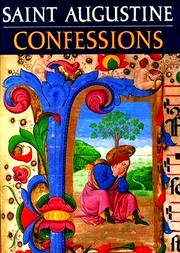
Nonfiction
Confessions
St Augustine of Hippo · c. 400 · Classic
'Our heart is restless until it rests in you.' Augustine's story of his long road to God is the first great Christian autobiography, and the best book for a pilgrim with weeks to think.
Find it on Open Library →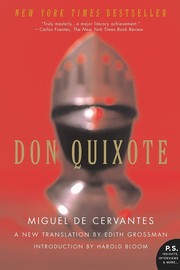
Fiction
Don Quixote
Miguel de Cervantes · 1605 · Novel
Spain's great novel: an old knight and his squire take to the roads of La Mancha in search of adventure. Cervantes joined the Third Order of St Francis before he died in 1616. On the long, flat days of the Meseta, the Don is the best company.
Find it on Open Library →To live without faith is not living, but merely existing. Walk toward something.
Other treks nearby
Written by Alto from maps, guidebooks and pilgrim information. Check albergue openings and current conditions before you go. Route © OpenStreetMap contributors (ODbL).