
Sacred Valley · Peru
Inca Trail
Four days on the stone road of the Incas, over Dead Woman's Pass and through cloud forest ruins, to Machu Picchu at sunrise.
- 4 days
- 30 km
- 2,800 m of climbing
- 3 nights in camps
Photo Diego Delso, CC BY-SA 4.0
The classic Inca Trail follows a stone road built more than five hundred years ago, from the Urubamba valley over the Andes to Machu Picchu. It is short but steep: you cross a pass at 4,215 m, climb and descend thousands of stone steps, and pass a chain of Inca sites that you can only reach on foot.
Walkers go with a licensed operator, a guide and porters who carry the camp, and numbers are limited each day. Most begin in Cusco, where the Dominican church of Santo Domingo stands on the walls of the Inca temple of the sun, and the cathedral's painting of the Last Supper shows a roast guinea pig on the table.
At a glance
Fly the route
Inca Trail from above
30 km on the real trail, over 3D terrain, past every chapter of the story.
Meditation planWith St Turibius of Mogrovejo: prayers for every day of the trek
Walked under the patronage of St Turibius of Mogrovejo. The archbishop of Lima who spent years crossing the Andes on foot and by mule to reach every village in his diocese, learning Quechua so he could preach to its people. He confirmed St Rose of Lima. Feast day: 23 March.
Every day
Setting out
Each morning, before you lace your boots or at the trailhead.
Pray the offering for the stone road
Lord, St Turibius walked these mountains for years to find every soul in his care, through cold and heat and thin air. Give us a little of his perseverance on the stone steps today.
I offer you the climb, the shortness of breath, the headache of the altitude and the joy of the clouds below us. Keep our group together and our porters safe. Amen.
V.St Turibius and St Rose of Lima,
R.pray for us.
At noon
Wherever you are on the trail, stop, take off your pack and pray together.
Pray the noon prayer for the porters
Father, we stop to rest, and the porters pass us on the trail, carrying our tents, our food and our comfort on their backs.
Bless them and their families. Give them fair pay, strong bodies and safe homecomings. Teach us to see the people who carry our loads, in these mountains and at home, and to thank them. Amen.
Pray the Angelus
V.The Angel of the Lord declared unto Mary,
R.And she conceived of the Holy Spirit.
Hail Mary, full of grace, the Lord is with thee; blessed art thou among women, and blessed is the fruit of thy womb, Jesus. Holy Mary, Mother of God, pray for us sinners, now and at the hour of our death. Amen.
V.Behold the handmaid of the Lord.
R.Be it done unto me according to thy word.
Hail Mary…
V.And the Word was made flesh,
R.And dwelt among us.
Hail Mary…
V.Pray for us, O holy Mother of God,
R.That we may be made worthy of the promises of Christ.
Let us pray.
Pour forth, we beseech thee, O Lord, thy grace into our hearts; that we, to whom the incarnation of Christ thy Son was made known by the message of an angel, may by his passion and cross be brought to the glory of his resurrection. Through the same Christ our Lord. Amen.
In camp
Each evening before you sleep: look back over the day, give thanks, ask for tomorrow.
Pray the Examen under the southern stars
Look up: the stars here are the southern sky, and the Southern Cross is among them. God is here.
Give thanks for the ruins and the cloud forest, for your guide, for the cooks and the porters.
Ask for light to see the day as God sees it.
Walk back over the day. When did you feel small in a good way? When did the climb make you short with someone?
Ask forgiveness for any impatience, and forgive.
Ask for tomorrow's strength, and for an open heart for whatever you will see.
Lord, the people who built this road watched these same stars. Remember them, and keep all of us in your peace tonight. St Turibius, pray for us.
Glory be to the Father, and to the Son, and to the Holy Spirit; as it was in the beginning, is now, and ever shall be, world without end. Amen.

Day 1
The Sacred Valley
Km 82 (Piscacucho) → Wayllabamba
- 7.3 km
- ↑ 609 m
- ↓ 262 m
- 3 h 30 walking
- sleep at 3,000 m
The trail begins at Km 82, near Ollantaytambo, with a bridge over the Urubamba and a gentle walk beside the river through dry hillsides of cactus and broom.
Below the path lie the terraces of Patallacta, an Inca settlement that once supplied the road. You camp at Wayllabamba, a farming village where the trail turns up into the mountains.
Don't miss
- Looking down on the terraces of Patallacta.
- The first night under Andean stars.
Meditation for day 1
“I have lifted up my eyes to the mountains, from whence help shall come to me.”
Psalm 120:1 (121:1)
You are walking a road other hands built for you. Thank God for the unknown people whose work you rely on.
Choose an operator that treats its porters fairly: decent loads, pay, food and gear.

Day 2
Dead Woman's Pass
Wayllabamba → Pacaymayo
- 7.2 km
- ↑ 1,241 m
- ↓ 495 m
- 6 h walking
- sleep at 3,600 m
The hardest day: a climb of more than 1,000 m, first through cloud forest of mossy trees and orchids, then onto open grassland, to Warmiwañusca, Dead Woman's Pass, at 4,215 m. The ridge is named for its outline, like a woman lying down.
At the top, the porters cheer every walker in. Then comes a long, steep descent on stone steps to camp in the valley of Pacaymayo.
Don't miss
- Reaching the top of Warmiwañusca.
- Hummingbirds in the cloud forest.
Meditation for day 2
“How beautiful upon the mountains are the feet of him that bringeth good tidings, and that preacheth peace.”
Isaias 52:7
Go slowly at altitude, and let others go slowly too. Every step up is shared.
Spend two or three days in Cusco first to adjust to the altitude.

Day 3
Ruins in the clouds
Pacaymayo → Wiñay Wayna
- 8.9 km
- ↑ 635 m
- ↓ 1,289 m
- 6 h walking
- sleep at 2,650 m
The longest and most beautiful day. The trail climbs past the round ruins of Runkurakay to a second pass, then winds along the mountainside on original Inca paving, through a tunnel cut in the rock, past the clifftop town of Sayacmarca.
At Phuyupatamarca, 'the town above the clouds', the mist often lies below you. Thousands of stone steps lead down to Wiñay Wayna, 'forever young', whose curving terraces hang over the river.
Don't miss
- Clouds filling the valleys below Phuyupatamarca.
- The terraces of Wiñay Wayna in late afternoon.
Meditation for day 3
“It is better therefore that two should be together, than one: for they have the advantage of their society: if one fall he shall be supported by the other.”
Ecclesiastes 4:9–10
Wiñay Wayna means 'forever young'. The Lord makes all things new: let him make you new too.

Day 4
The Sun Gate
Wiñay Wayna → Machu Picchu
- 6.9 km
- ↑ 305 m
- ↓ 932 m
- 3 h 30 walking
- finish at 2,430 m
Rise in the dark and wait at the checkpoint for it to open, then walk the last hour by headtorch along a narrow path on the cliff edge.
At Inti Punku, the Sun Gate, the whole of Machu Picchu appears below you, the city the Inca Pachacuti built in the 15th century, often lit by the first sun over the mountains. Then you walk down into it.
Don't miss
- Sunrise over Machu Picchu from the Sun Gate.
- Walking down the last stones into the city.
Meditation for day 4
“May the Lord keep thy coming in and thy going out; from henceforth now and for ever.”
Psalm 120:8 (121:8)
The Sun Gate at dawn: a reminder that we are made for light.
Before you go
No churches or chapels are mapped within 1.5 km of this trail in OpenStreetMap. Plan your Sundays in the day-by-day planner.
Permits
Permits are limited each day and sold only through licensed operators. They sell out months ahead for the dry season.
When
May to September is the dry season. The trail closes every February for maintenance.
Altitude
Spend a few days in Cusco or the Sacred Valley before you start, and drink plenty of water.
Machu Picchu
Your permit includes entry to Machu Picchu. Book the bus down to Aguas Calientes and the train back in advance.
The numbers
30 km, about 2,800 m of climbing, high point 4,215 m. Walking times use the Alpine signpost rule, without breaks.
The practical side
- Where you sleep
- Designated campsites; your licensed operator supplies tents, cooks and porters.
- Permits & bookings
- Permits are limited and sold only through licensed operators. They sell out months ahead. The trail closes every February.
- Guide
- Mandatory: you must walk with a licensed operator.
- Water
- Boiled water is provided by your operator at camp.
- Food & resupply
- None after the first day; meals are provided.
- Direction
- One way, from Km 82 to Machu Picchu via the Sun Gate.
- Getting there & away
- Bus or train from Cusco to Km 82 (Piscacucho). Return by train from Aguas Calientes.
- Stages
- 4 days: Wayllabamba, Dead Woman's Pass, Wiñay Wayna, Machu Picchu at dawn.
Rules, fees and booking systems change. Check the official source before you go: Machu Picchu official site ↗
Books for the trail

Of this place
The Bridge of San Luis Rey
Thornton Wilder · 1927 · Novel
In colonial Peru an Inca rope bridge breaks and five travellers fall. A Franciscan friar sets out to discover whether it was chance or Providence. You will cross the Andes on the same kind of road.
Find it on Open Library →
Nonfiction
The Autobiography of St Ignatius of Loyola
St Ignatius of Loyola · c. 1555 · Memoir
Ignatius dictated his story in the third person, calling himself simply 'the pilgrim'. His Jesuits built the great church of La Compañía on the main square of Cusco, where most Inca Trail walkers begin.
Find it on Open Library →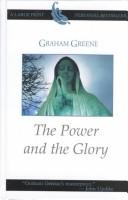
Fiction
The Power and the Glory
Graham Greene · 1940 · Novel
A hunted 'whisky priest' flees through the mountains and jungles of southern Mexico, where the Church is outlawed, and keeps saying Mass. Greene's greatest novel about grace in a weak man, and about Latin America's long Catholic story.
Find it on Open Library →The Sun Gate at dawn: a reminder that we are made for light.
Written by Alto from maps, guidebooks and park information. Check permits and current rules with a licensed operator before you go. Route © OpenStreetMap contributors (ODbL).